Friday, June 7, 2024

07 June - RMS Lusitania is launched from the John Brown Shipyard, Glasgow (Clydebank), Scotland in 1906


The RMS Lusitania, a prestigious ocean liner of the Cunard Line, was launched from the John Brown Shipyard in Clydebank, Glasgow, Scotland, on 07 June 1906. As one of the largest and fastest passenger ships of its time, the Lusitania was designed to offer luxury and speed, significantly enhancing transatlantic travel. Its launch marked a milestone in maritime engineering and design, symbolizing the prowess of British shipbuilding.

The Lusitania later gained historical notoriety when it was sunk by a German U-boat on May 7, 1915, during World War I. This tragic event resulted in significant loss of life and contributed to shifting public opinion in the United States against Germany, influencing the eventual American entry into the war. The legacy of the Lusitania endures both as a marvel of early 20th-century maritime achievement and a poignant reminder of the vulnerabilities of civilian ships during wartime.


Monday, May 27, 2024

27 May - The British navy sinks the German battleship Bismarck


On May 27, 1941, the British navy sinks the German battleship Bismarck in the North Atlantic near France. The German death toll was more than 2,000.

On February 14, 1939, the 823-foot Bismarck was launched at Hamburg. Nazi leader Adolf Hitler hoped that the state-of-the-art battleship would herald the rebirth of the German surface battle fleet. However, after the outbreak of war, Britain closely guarded ocean routes from Germany to the Atlantic Ocean, and only U-boats moved freely through the war zone.

In May 1941, the order was given for the Bismarck to break out into the Atlantic. Once in the safety of the open ocean, the battleship would be almost impossible to track down, all the while wreaking havoc on Allied convoys to Britain. Learning of its movement, Britain sent almost the entire British Home Fleet in pursuit. On May 24, the British battle cruiser Hood and battleship Prince of Wales intercepted it near Iceland. In a ferocious battle, the Hood exploded and sank, and all but three of the 1,421 crewmen were killed. The Bismarck escaped, but because it was leaking fuel it fled for occupied France.

On May 26, the ship was sighted and crippled by British aircraft, and on May 27 three British warships descended on the Bismarck, inflicting heavy damage. By mid-morning, the pride of the German navy had become a floating wreck with numerous fires aboard, unable to steer and with her guns almost useless because she was listing badly to port. Soon, the command went out to scuttle the ship, and the Bismarck quickly sank. Of a 2,221-man crew, only 115 survived.

Tuesday, May 7, 2024

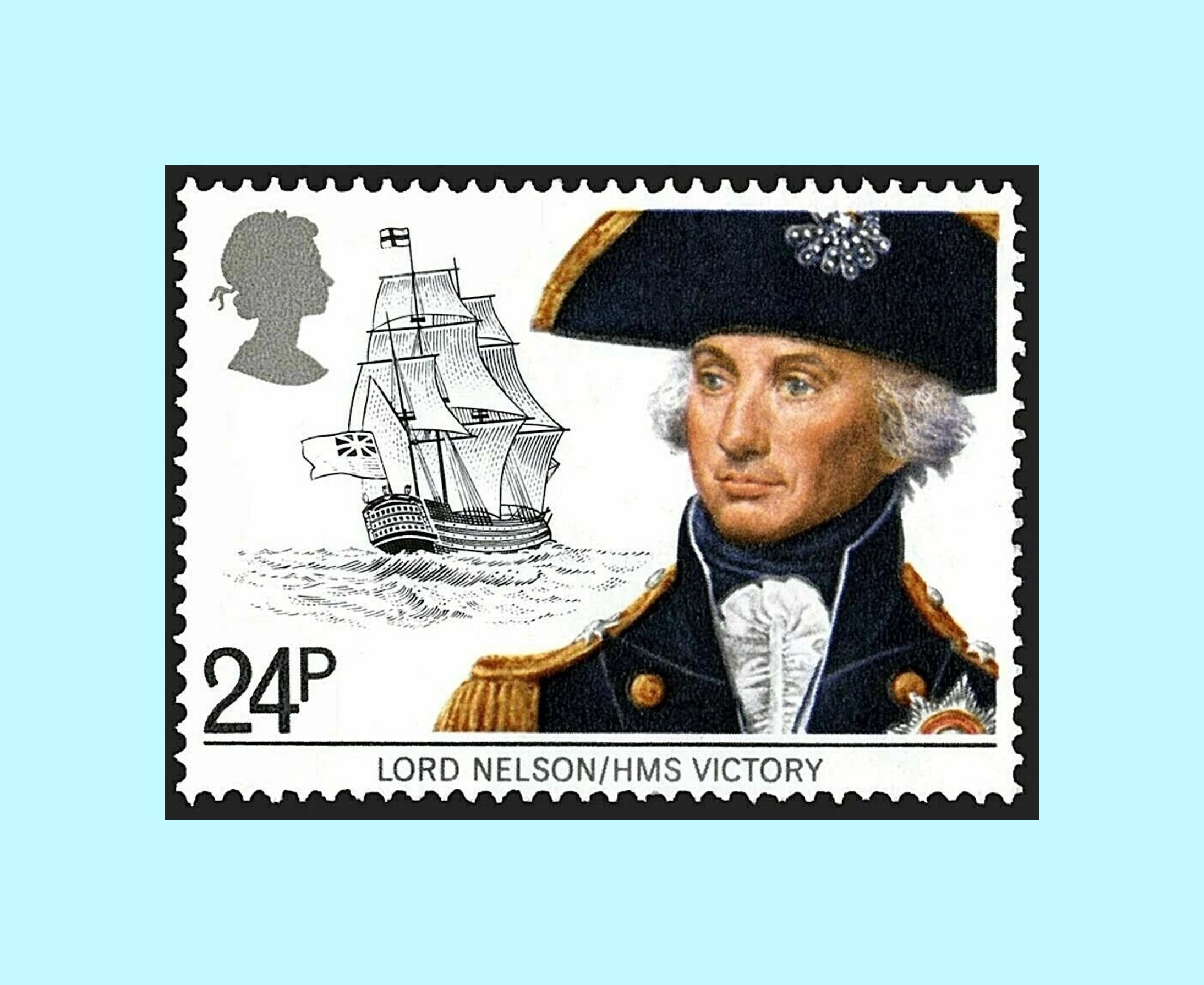
HMS Victory is launched at Chatham Dockyard, Kent in 1765


On 07 May 1765, HMS Victory, one of the most famous ships in British naval history, was launched at Chatham Dockyard in Kent, England. The ship was a first-rate ship of the line, with 104 guns, and was the largest warship of its time. Despite being launched in 1765, it wasn't until 1778 that HMS Victory was commissioned into active service in the Royal Navy.

HMS Victory went on to have a storied career, most notably serving as Admiral Lord Nelson's flagship during the Battle of Trafalgar in 1805. It was during this battle that Nelson achieved his famous victory over the combined French and Spanish fleets, but tragically lost his life in the process. Today, HMS Victory is preserved as a museum ship at the Historic Dockyard in Portsmouth, England, where visitors can explore its decks and learn about its fascinating history.


Friday, April 26, 2024

26 April - USS Stewart (DD 13) collides with an unidentified steamer near Brest, France.


The USS Stewart (DD-13), a Bainbridge-class destroyer, collided with an unidentified steamer near Brest, France, on April 26, 1918. This incident occurred during World War I when the USS Stewart was serving as part of the United States Navy's contribution to the Allied effort in Europe.

The collision resulted in damage to the USS Stewart, which was likely repaired in due course. Unfortunately, historical records regarding this specific incident are limited, and details about casualties, if any, or the extent of the damage sustained by both vessels are not readily available. However, it's worth noting that naval operations during wartime often involved risks and challenges, including navigational hazards and encounters with enemy vessels or submarines.


Monday, April 15, 2024

15 April - RMS Titanic sunk in the North Atlantic Ocean


April 15th marks the anniversary of the sinking of the RMS Titanic, one of the deadliest maritime disasters in history. On April 15, 1912, the Titanic struck an iceberg and sank in the North Atlantic Ocean during its maiden voyage from Southampton to New York City. The ship, which was considered unsinkable, had insufficient lifeboats for all passengers and crew, leading to a significant loss of life.

The sinking of the Titanic resulted in the deaths of over 1,500 people, making it one of the deadliest commercial peacetime maritime disasters in modern history. The tragedy led to widespread changes in maritime safety regulations, including the implementation of stricter safety standards, the requirement for ships to carry enough lifeboats for all passengers and crew, and the establishment of an international ice patrol to monitor iceberg danger in the North Atlantic.

The sinking of the Titanic continues to be remembered and commemorated each year on April 15th through various memorial events, ceremonies, and remembrances around the world.

Sunday, March 24, 2024

24 March - British ship Eurydice sunk in 1878


On March 24, 1878, the British ship HMS Eurydice sank off the Isle of Wight. HMS Eurydice was a Royal Navy ship, a wooden-hulled screw frigate. The sinking of the Eurydice was a tragic maritime disaster resulting in the loss of 317 lives.

The ship had been returning to Portsmouth, England, from the West Indies when it encountered a violent storm off the Isle of Wight. The storm caused the ship to capsize and sink rapidly. Despite rescue efforts by nearby ships and shore-based lifeboat crews, only two of the crew members survived.

The sinking of the HMS Eurydice was one of the worst peacetime naval disasters in British history and led to significant changes in naval design and safety protocols. The tragedy served as a stark reminder of the dangers faced by sailors at sea and prompted improvements in ship construction and safety procedures to prevent similar incidents in the future.


Monday, March 4, 2024

India's first aircraft carrier warship INS Vikrant was deployed on 04 March 1961


India's first aircraft carrier, INS Vikrant, was commissioned and deployed on March 4, 1961. INS Vikrant played a crucial role in the Indian Navy and had a notable history. It was a Majestic-class aircraft carrier originally built for the British Royal Navy during World War II, named HMS Hercules. After India acquired it, it underwent significant modifications before being commissioned as INS Vikrant.

INS Vikrant played a vital role during the Indo-Pakistani War of 1971, supporting naval operations in the Bay of Bengal. It served the Indian Navy for several decades before being decommissioned in 1997. The name Vikrant was later given to a more modern aircraft carrier, INS Vikrant (IAC-1), which was under construction and expected to be commissioned into the Indian Navy.